
I Married a Terminally Ill Man to Fulfill His Final Wish—After His Funeral, His Lawyer Handed Me a Letter Revealing Who He Really Was
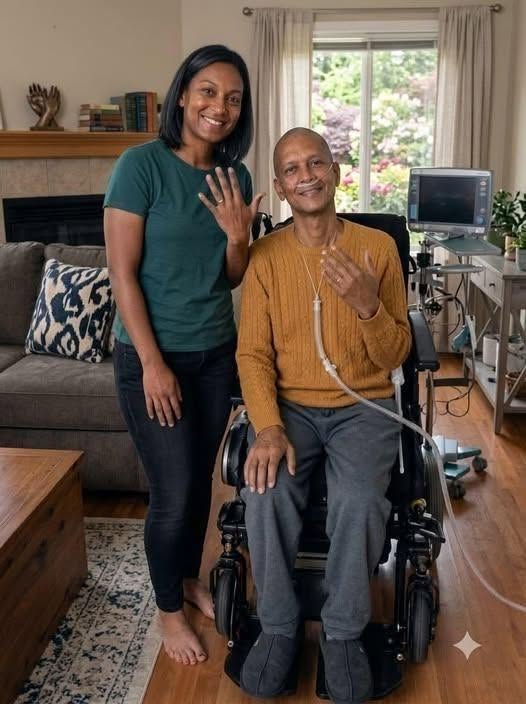
For three years, I spent my Tuesday and Thursday afternoons volunteering with a local community hospice support program. Most of the individuals assigned to me were elderly or coping with advanced illnesses, simply needing someone to help with light housekeeping, meal preparation, or basic companionship. It was quiet, fulfilling work, and it gave my life a deep sense of purpose.
Six months ago, the volunteer coordinator assigned me to a new home.
The patient’s name was Carl. He was forty-two years old, living with terminal stage-four cancer, and residing entirely alone in a modest, sunlit cottage on the edge of town. Despite the harsh realities of his medical diagnosis, Carl possessed a gentle warmth and an effortless sense of humor. We formed a genuine friendship almost immediately.
Over the next few months, our routine became the highlight of my week. I brought him home-cooked soups, helped tidy his living room, and sat with him on the porch during long afternoons, playing board games and sipping herbal tea. He was an attentive listener, often asking detailed questions about my childhood, my late mother, and how I had managed to navigate growing up in the local foster care system after being orphaned at five years old. I felt an inexplicable sense of comfort around him—a deep, familiar calm that I had never experienced with anyone else.
Then, on a rainy Tuesday afternoon, while we were sitting by the fireplace, Carl set his tea cup down and looked at me with solemn eyes.
“Sarah, will you marry me?” he asked softly. “I know how sudden and strange this sounds, but I would like to leave this world knowing I am not completely alone.”
I was caught entirely off guard, staring at him in disbelief. “Carl… we’ve only known each other for a few months…”
He smiled gently, his eyes filled with a quiet earnestness. “I know. But that has been more than enough time for me to see the incredible kindness in your heart. It would truly mean everything to me. It is the one final wish I have before my time comes.”
I looked at his frail hands and the genuine hope in his eyes. While it was unconventional, I felt a powerful, invisible pull connecting me to him. I cared for him deeply, and if a quiet administrative ceremony could bring him peace in his final days, I was willing to grant it.
“Yes, Carl,” I whispered. “I’ll marry you.”
The very next day, a local justice of the peace arrived at Carl’s cottage. I wore a simple white t-shirt and jeans—the only white clothing I owned—standing beside his armchair in the middle of his small living room. There were no wedding guests, no flower arrangements, and no music, but as we exchanged simple vows and signed the license, a brilliant, profound happiness radiated from his face.
Carl passed away peacefully ten days later, holding my hand as he took his final breath.
I grieved for him deeply. Though our marriage had lasted less than two weeks, the bond we shared felt profound and enduring. Following a quiet memorial service arranged by the hospice staff, I returned to my small apartment, emotionally exhausted and sitting alone in the quiet dusk.
Suddenly, a firm knock resonated at my front door.
I opened it to find a middle-aged man in a tailored dark suit, holding a leather briefcase. He tipped his hat politely and introduced himself as Mr. Harrison, a private estate attorney.
“Sarah,” Mr. Harrison said gently. “I was Carl’s legal representative. He gave me strict instructions to wait until after his funeral service to deliver this to you personally and reveal the truth of who he really was.”
He pulled a thick, wax-sealed manila envelope from his briefcase and handed it to me. “Once you read the letter inside, everything will make sense.”
My hands trembled as I took the envelope. I invited Mr. Harrison inside, sat down at my kitchen table, and carefully broke the wax seal. Inside was an official legal document alongside a handwritten letter penned in Carl’s familiar, elegant script.
I unfolded the letter and began reading the first line:
“Dearest Sarah, Our meeting at the hospice program was not an accident. I have known who you were your entire life, and I have quietly watched over you from a distance.”
My breath hitched in my throat. I quickly moved my eyes down to the second line:
“My real name is Carl Vance Jr. I am your biological uncle—your mother’s younger brother whom she lost contact with decades ago during our family’s relocation.”
My knees completely gave out beneath me, and I slid from the chair onto the hardwood floor, tears welling in my eyes as I clutched the paper.
The letter went on to detail a story that reshaped my entire understanding of my life.
Decades earlier, a bitter family misunderstanding had separated Carl from my mother just before she moved across the country. By the time Carl managed to trace her location years later, she had tragically passed away in an automobile accident, leaving me behind in the foster care system. Because Carl was young, financially unstable, and serving overseas in the military at the time, his petitions for guardianship were denied by the state, and I was placed with a foster family.
Determined never to abandon me completely, Carl spent the next twenty years building a successful manufacturing business, quietly funding a private trust in my name and monitoring my progress through school, ensuring I always had anonymous scholarships and educational grants.
When he received his terminal diagnosis, he discovered that due to complex estate laws and an estranged distant relative attempting to claim his estate, passing his life savings directly to a long-lost niece would lead to years of contested legal battles and massive tax liquidations.
“The only legal mechanism to ensure that 100% of my estate, property, and life’s work transferred to you instantly and without any legal challenge,” Carl wrote on the third page of his letter, “was for you to become my legal spouse and sole heir under the law.”
Attached to the letter was the financial summary of the estate: the cottage, several commercial properties, and a fully established family foundation worth millions of dollars—all placed entirely under my name.
“I did not want to burden you with the heavy history of our family’s past while I was sick,” the letter concluded. “I simply wanted to spend my final days getting to know the remarkable, compassionate woman you had become, and to ensure that for the rest of your life, you would never have to worry about security, comfort, or being alone again. You gave me the greatest gift of my life by being by my side at the end. Everything I have is now yours, sweet Sarah. With all my love, Uncle Carl.”
Tears fell freely onto the page as I finished reading his final words. Mr. Harrison reached down, gently helping me back into the chair, handing me a glass of water.
Looking out the window at the evening stars, the quiet solitude of my apartment no longer felt cold or lonely. I finally understood the strange, instantaneous connection I had felt the moment I entered his cottage. It wasn’t just kindness that had brought us together—it was family, coming full circle to bring healing, love, and protection when I needed it most.